
Your home is likely losing heat in ways you can’t see. Draughts, poor insulation, and underperforming windows all contribute to higher energy bills and a less comfortable living environment. The challenge is simple: you can’t fix what you can’t identify.
A thermographic survey helps reveal these hidden heat leaks by capturing temperature differences across your home’s surfaces. Sometimes it uncovers clear issues; other times it confirms that nothing major is wrong — both outcomes are useful.
Where it becomes genuinely powerful is when those findings are paired with our interactive, real‑time system. Instead of just receiving a report, you can experience how different improvements would look, feel, and perform before committing to any capital expense.
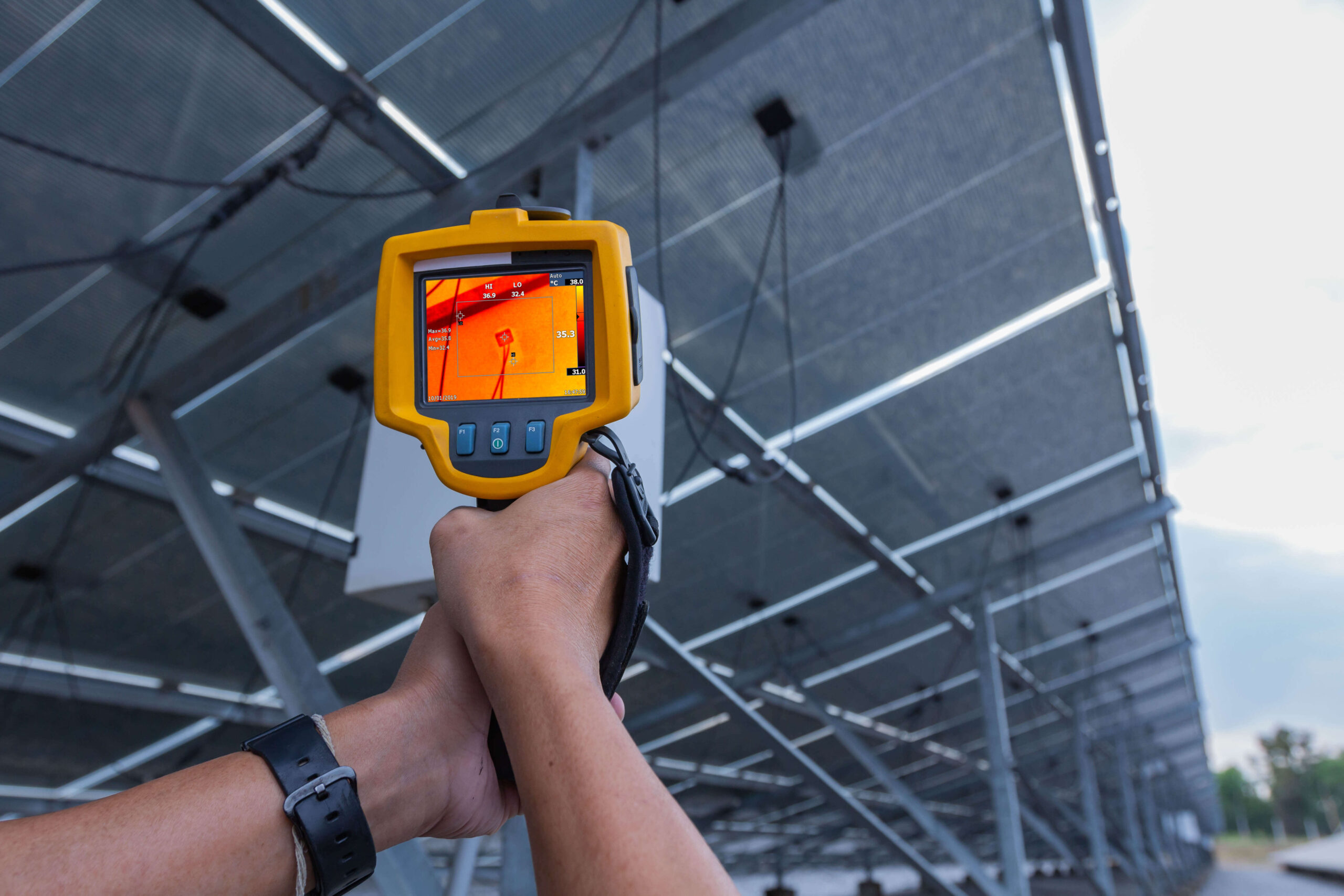
Thermography is the process of capturing heat energy and converting it into images. A thermographic survey uses a specialised camera that detects infrared radiation — the heat emitted by all objects. By capturing this radiation, the camera creates a thermal image that reveals temperature variations across a building’s surfaces.
Traditionally, a thermographic survey involves scanning a home’s exterior and interior walls, windows, and roof. Combined with the surveyor’s skills and knowledge, this can highlight areas of heat loss and make it possible to see exactly where energy is escaping.
Even though thermography is a diagnostic tool rather than a design tool, the insights it provides are extremely valuable when planning refurbishments or retrofit improvements.
Understanding where and how a home loses heat has several benefits:
Thermography doesn’t fix these issues — but it can show you where they are, how severe they might be, or — just as importantly — when there’s nothing significant to worry about.
A thermographic survey provides data that helps you understand the real condition of your home. This is especially useful when planning retrofit improvements.
Thermal imaging can help you:
On its own, thermography is a snapshot. Where it becomes powerful is when it’s used to inform the design and planning process.
This is where our approach differs from traditional surveying.
Thermography gives you the evidence of heat loss. Our system lets you understand the implications of that evidence — and test solutions before committing to them.
By integrating thermographic insight into our real‑time interactive environments, you can:
Instead of simply receiving a report, you get a pre‑experience of how improvements will feel, look, and perform. Many surveyors can produce a report — very few can let you experience it in real time before construction begins.
This reduces the risk of ineffective upgrades, unnecessary spending, or unexpected outcomes.
Thermographic surveys are a valuable diagnostic tool for uncovering hidden heat loss and understanding how your home performs. But the real benefit comes when that information is used intelligently — not just to identify problems, but to guide better decisions.
By combining thermographic insight with our interactive, construction‑aware system, you can explore retrofit options with confidence, understand the impact of every choice, and plan improvements that genuinely make a difference.
If you’d like to see how thermographic data can be integrated into a clear, interactive pre‑experience of your home, we can help you make sense of it and turn it into practical, risk‑reducing clarity.

Copyright © 2026. mVision Property Solutions. All rights reserved.


